A Comparative Study of the Demands of Petitioning Actors in the Rural Society of Kermanshahan during the Constitutional and Reza Shah Eras (1906–1941 CE)
Keywords:
Kermanshahs, petition writing, social demands, rural society, constitutionalism, PahlaviAbstract
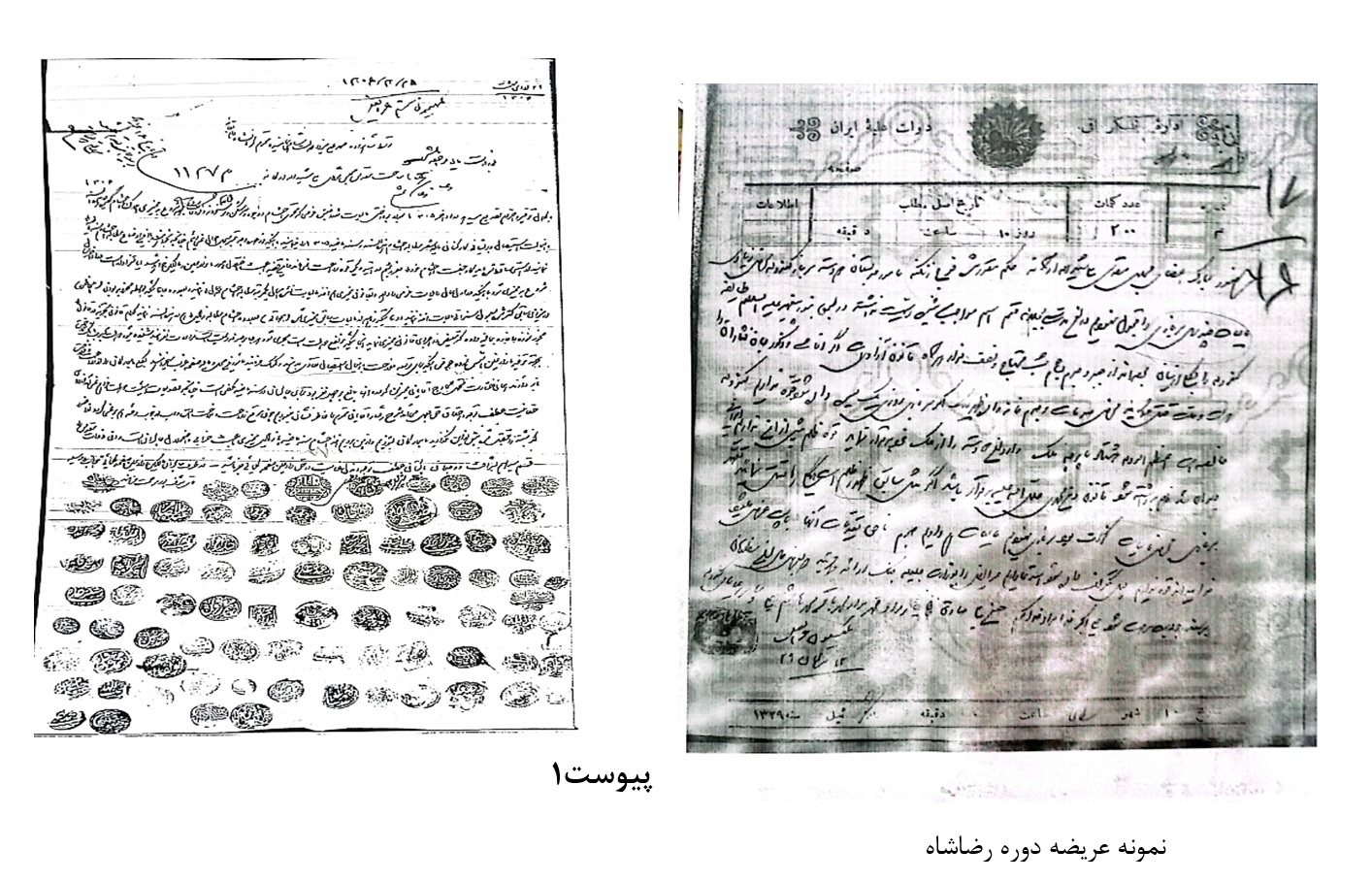
The petition (ʿarīża) is considered one of the important historical documents encompassing multiple social, economic, political, and cultural dimensions, but it holds particular significance in the field of social history. This type of document not only reflects the everyday concerns of the people but also conveys their social perspectives and attitudes toward governments and political–social transformations. In other words, petitions represent the interactions of people with one another and with governing authorities. In the history of Iran, villages have always been among the main centers of petition writing, used as a means to seek justice, remedy grievances, and regulate relations with authorities and other communities. This article aims to identify and compare the concerns and issues of the rural society of Kermanshahan during the Constitutional Revolution and the reign of Reza Shah, based on data obtained from petitions of those periods. Employing a qualitative and comparative content analysis approach, the study examines, interprets, and analyzes the available petitions from both eras and seeks to answer the following question: What were the demands of social actors in the rural society of Kermanshahan during these two periods, and how did these demands evolve? The findings reveal that these demands can be analyzed within four main categories—social, political, economic, and cultural—and have fluctuated under the influence of historical transformations and events within the sphere of rural life. During the Constitutional period, political and social demands primarily revolved around security issues and the elimination of oppression, whereas in the Reza Shah era, the rural population’s concerns were more focused on everyday social and economic matters and on how to interact with representatives and officials of the central government.
Downloads
References
Abadian, H., & Bakhtiari, M. (2015). The Impact of Rural and Nomadic Community Relations on the Lives of Villagers in the Qajar Era. Iranian and Islamic History Research(17), 1-18.
Abdollahian, H. (2013). Conceptualizing Reality in Historical Sociology: The Absentee Landlord System in Iran. Jame'e Shenasan Publishing.
Adamiat, F., & Nategh, H. (1977). Social, Political, and Economic Ideas in the Unpublished Works of the Qajar Era. Agah Publishing.
Ashraf, A. (1974). Historical Characteristics of Urbanization in Iran during the Islamic Period. Journal Of Social Sciences(53).
Clark, C. (2015). Kermanshah: Center of the Fifth Province. Research Institute of Cultural Heritage and Tourism.
Clark, C. (2016). Kermanshah, a City in Iran. Razi University.
Coen, B. (1999). An Introduction to Sociology. Tutiya Publishing.
Darabi, H. (2014). The Culture of Kermanshah. Quarterly Journal of the General Directorate of Culture and Islamic Guidance of Kermanshah Province(3), 61-83.
Dehkhoda, A. A. (1998). Dehkhoda Dictionary (Vol. 8). University of Tehran Press.
Foran, J. (2006). Fragile Resistance: A History of Social Transformations in Iran from 1500 to 1979. Rasa Cultural Services.
Grothe, H. (1990). Grothe's Travelogue. Nashr-e Markaz.
Hesamian, F., E'Temad, G., & Ha'eri, M. R. (1984). Urbanization in Iran. Agah.
Kadivar, P. (2021). Social History of the Qajar Era. Phoenix Publications.
Karamali, A., Khazaei, S., & Rahmati, M. (2022). A Typology of Women's Protests in the Naseri Era (1847-1896). Iranian Scientific and Research Journal, 15(1, Serial 1401), 212-245. https://doi.org/10.52547/irhj.15.1.245
Karami, S., & Rahmanian, D. (2019). Private Ownership in Kermanshah (First Pahlavi Era). Journal of Iranian Local Histories, 8(1, Serial 15), 91-104.
Katouzian, M. A. (1987). The Political Economy of Iran: Despotism and Semi-Modernism 1926-1978 (Vol. 1). Papiros.
Khandabi, M. A. (2021). A Critique and Review of the Collection of Petitions during the Naseri Period. Pazhvah-e Jame'e Quarterly, 2(2), 253-276.
Komam. A series of references.
Lambton, A. K. S. (1998). Landlord and Peasant in Persia. Elmi Farhangi Publishing Company.
Laws, A. C. o. t. A., & Legislations of the Eighth Legislative, T. (1947). A Collection of the Approved Laws and Legislations of the Eighth Legislative Term. National Consultative Assembly.
Majlis, N. (1907). Majlis Newspaper.
Matani, R. (2009). The Social Conditions of Iranian Rural Society in the Qajar Era Based on Foreign Travelers' Reports. Historical Research, 11(40-41), 1-26.
Rabino, H. L. (2012). A Report on the Trade and Society of Kermanshah City and Province in the 19th Century. Razi University.
Rahmanian, D., & Karami, S. (2019). A Historical Study of the Consequences of Agricultural Commercialization in Western Iran: A Case Study of Kermanshah and Lorestan (First Pahlavi Era). Iranian History Journal after Islam, 10(20), 47-70.
Rahmanian, D., Soufi, A., Taheri Moghaddam, M., & Karami, S. (2016). The Emergence of Female Landlords in Western Iran, from the Constitutional Revolution to the End of the First Pahlavi Era. Women's Research Journal, 7(17), 47-67.
Razmara, H. A. (1943). Military Geography - Iran - Kermanshah. Army Publications Organization.
Safaei, E. (1968). The Petitions Box. Tekin Magazine(42).
Schneider, I. (2006). The petitioning system in Iran state wiesbaden, society and power relations in the late19 century. harrassowitz verlag.
Soudagar, M. (1980). The Feudal System in Iran. Pazand Publishing.
Sour Esrafil, N. (1908). Sour Esrafil Newspaper.
Talayi, Z. (2004). An Examination and Introduction of a Manuscript and Collection of Documents: "The Copybook of Complaints and Petitions from the Years 1874-1875". Ganjineh-ye Asnad(56).
Tarafdari, M. (2022). A Comparative Study of the Functions of Urban-Rural Areas in Iran from the Naseri Era to the Constitutional Revolution (1848-1906). Journal of History, Politics, and Media, 5(1, Serial 17), 35-60.
Tatari, A. (2009). An Examination of the Status of Petitions in Documentary Research. Payam-e Baharestan, 2(1, No. 4), 465-476.
Woods, M. (2011). Rural Geography. University of Tehran Press.
Yazdani, S. (2020). Rural People and Iran's Constitutional Revolution. Mahi Publications.
Yousefi Far, S., & Jangjou, S. (2014). The Position and Structure of the Kadkhoda Office in Iranian Rural Management from the Constitutional Revolution to the End of the First Pahlavi Government (1906-1941). Historical Research, Faculty of Literature, University of Isfahan, 50, 27-48.

Downloads
Published
Submitted
Revised
Accepted
Issue
Section
License
Copyright (c) 2025 ناهید کشتمند (نویسنده مسئول); محمد امیر شیخ نوری , روح الله بهرامی , سیمین فصیحی (نویسنده)

This work is licensed under a Creative Commons Attribution-NonCommercial 4.0 International License.