بررسی عوامل مؤثر در میزان مشارکت سیاسی شهروندان تهرانی در انتخابات ریاستجمهوری ایران
کلمات کلیدی:
مشارکت سیاسی, اعتماد سیاسی, انتخابات ریاستجمهوری, شهر تهرانچکیده
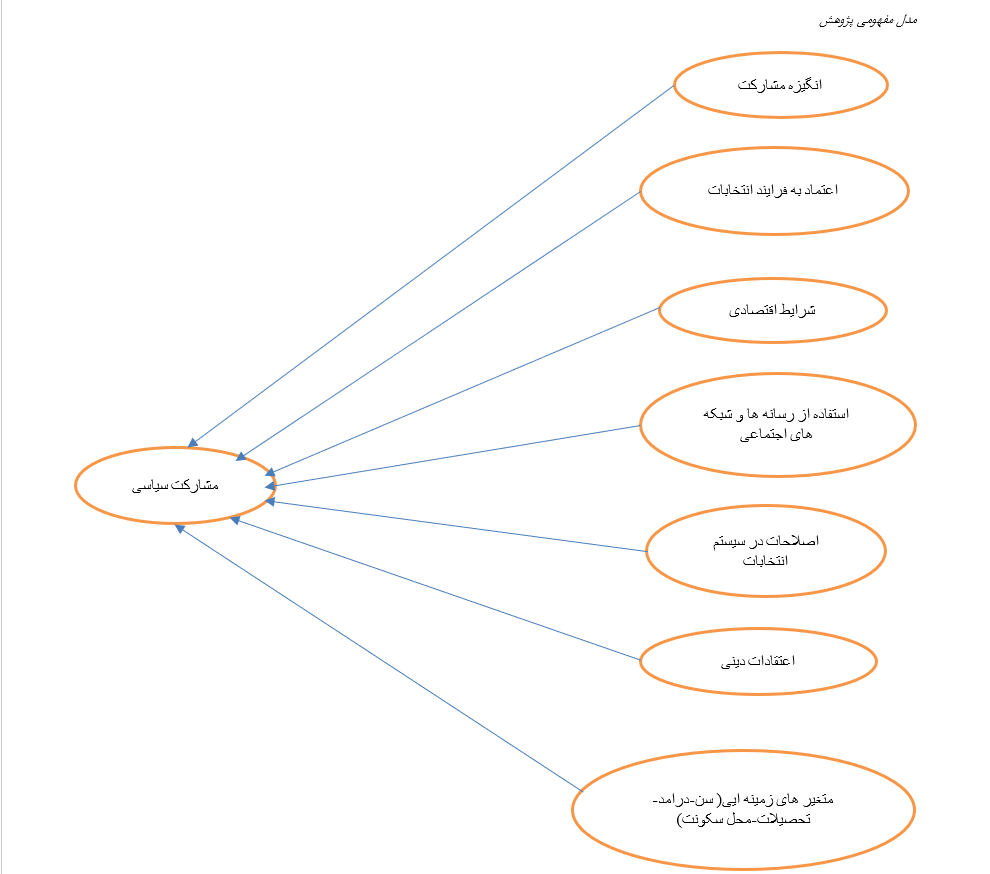
پژوهش حاضر باهدف بررسی عوامل مؤثر بر میزان مشارکت سیاسی شهروندان تهرانی در سیزدهمین دوره انتخابات ریاستجمهوری ایران انجام شده است. این انتخابات با کاهش چشمگیر مشارکت مواجه بود بهطوریکه میزان مشارکت در تهران به حدود ۲۶ درصد رسید. پژوهش با روش پیمایشی و با استفاده از پرسشنامه محقق ساخته روی نمونهای ۳۸۴ نفری از شهروندان تهرانی با روش نمونهگیری تصادفی طبقهبندیشده از پنج منطقه شهرداری اجرا شد. یافتههای حاصل از مدلسازی معادلات ساختاری نشان داد که مهمترین و قویترین عامل تأثیرگذار بر مشارکت سیاسی، «اعتماد به فرایند انتخابات» است (با ضریب مسیر ۰٫۶۴۲). همچنین متغیرهای «اعتقادات دینی»، «اصلاحات در سیستم انتخابات»، «استفاده از رسانهها و شبکههای اجتماعی»، «سن» و «تحصیلات» تأثیر مثبت و معناداری بر مشارکت داشتند؛ درحالیکه «شرایط اقتصادی» و «درآمد» تأثیر مستقیم و معناداری نشان ندادند. متغیر «منطقه محل سکونت» نیز تأثیر منفی داشت به این معنا که مناطق محروم جنوب و شرق تهران مشارکت کمتری نسبت به مناطق شمالی و مرکزی داشتند. مدل پژوهش توانست ۷۱ درصد از تغییرات مشارکت سیاسی را تبیین کند. در مجموع، نتایج نشان میدهد که کاهش مشارکت در انتخابات موردمطالعه عمدتاً ناشی از بیاعتمادی شهروندان بهسلامت، شفافیت و بیطرفی فرایند انتخاباتی بوده است، نه صرفاً مشکلات اقتصادی؛ بنابراین بازسازی اعتماد عمومی از طریق اصلاحات ساختاری در نظام انتخابات (بهویژه افزایش شفافیت و نظارت بیطرفانه) و همچنین توجه ویژه به نسل جوان و ساکنان مناطق محروم، برای افزایش مشارکت در دورههای آتی ضروری به نظر میرسد.
دانلودها
مراجع
Almond, G. A., & Verba, S. (1963). The Civic Culture: Political Attitudes and Democracy in Five Nations. Princeton University Press.
Azadi, A. (1994). Political Awareness among Students of the University of Tehran and Allameh Tabataba'i University University of Tehran].
Azadi, A., Heidari, N., Fattahi, S., Beheshtinia, E., & Saeedynezhad, H. (2025). The Impact of Social Media and Cyberspace on Citizens' Electoral Behavior with an Emphasis on Political Participation in the 13th Presidential Election: In the Electoral Districts of Qasr-e Shirin, Sarpol-e Zahab, and Gilan-e Gharb. Journal of Psychological and Political Insights.
Bavar, S. (1995). Examining the Effect of the Economic and Social Status of Shiraz University Students on Their Attitudes toward Women's Political Participation Shiraz University].
Beck, P. A., & Jennings, M. K. (1970). Political Periods and Political Participation. American Political Science Review, 64(3), 737-749.
Beck, P. A., & Jennings, M. K. (1982). Pathways to Participation. American Political Science Review, 76(1), 94-108.
Bobo, L., & Gilliam, F. D. (1990). Race, Sociopolitical Participation, and Black Empowerment. American Political Science Review, 84(2), 377-393.
Brady, H. E., & Verba, S. (1995). Voice and Equality: Civic Voluntarism in American Politics. Harvard University Press.
Campbell, C., & Jovchelovitch, S. (2000). Health, Community and Development: Towards a Social Psychology of Participation. Journal of Community & Applied Social Psychology, 10(4), 255-270.
Chen, G., Li, X., & Zhang, Y. (2017). Social Media Use, Political Interest, and Participation among University Students in Guangzhou, China. Journal of Youth Studies, 20(5), 621-637.
Cho, W. K. T., & Rudolph, T. J. (2005). Geographical Clustering of Political Participation. Political Geography, 24(6), 723-748.
Clem, R. S., & Craumer, P. R. (1998). Regional Patterns of Voter Turnout in Russian Elections, 1993-1996. Post-Soviet Geography and Economics, 39(9), 497-523.
Crisis, G. (2021). Iran: The Riddle of Raisi.
Foundation for Defense of, D. (2024). Iranian Election Registers Lowest Voter Turnout since 1979.
Geys, B. (2006). Explaining Voter Turnout: A Review of Aggregate-Level Research. Electoral Studies, 25(4), 637-663.
Ghaffari Hashjin, Z., Rezaei, M., & Mohammadi, S. (2010). Factors Affecting Political Participation among Political Science and Engineering Students at the University of Tehran. Political Science Research Letter, 5(3), 91-112.
Goodarzifar, M., & Dinparast, F. (2024). The Impact of Judicial Branch Performance on the Reproduction of Political Trust in Iran. State Studies, 10(39), 253-288. https://tssq.atu.ac.ir/article_18303.html
Huntington, S. P., & Nelson, J. M. (1976). No Easy Choice: Political Participation in Developing Countries. Harvard University Press.
Inkeles, A. (1969). Participant Citizenship in Six Developing Countries. American Political Science Review, 63(4), 1120-1141.
Iranian Students Polling, A. (2003). Examining the Electoral Attitudes and Behavior of the People of Tehran before the Seventh Parliamentary Election.
Iranian Students Polling, A. (2005). Social Justice Discourse and Personal Characteristics: A Study on the Presidential Election.
Jemna, D. V., & Curelaru, M. (2009). Values and Political Participation of Students. Journal of Social Research, 13(2), 88-104.
Lipset, S. M. (1963). Political Man: The Social Bases of Politics. Doubleday.
Mehregan, N., & Ezzati, M. (2006). Examining the Impact of Different Factors on People's Participation in the Eighth Iranian Presidential Election: An Econometric Approach. Applied Economics Quarterly, 2(4), 51-70.
Milbrath, L. W. (1965). Political Participation: How and Why Do People Get Involved in Politics? Rand McNally.
Mohammadifar, N. (2025). The Role of Economic Development in Voting Behavior: Evidences from Iran's Presidential Elections. Iranian Journal of Economic Studies, 14(2), 527-546.
Mosaffa, N. (1994). Women's Political Participation Allameh Tabataba'i University].
Naderi, A. (2017). Meta-Analysis of Political Participation among Iranian Students: A Study of the Effectiveness of Explanatory Factors. Iranian Journal of Sociology, 18(1), 83-110.
Palizban, M. (2011). Examining Students' Tendency toward Political Participation and the Factors Affecting It. Political Science Quarterly, 14(2), 121-144.
Panahi, M. H. (2007). Political Participation: Theories, Models, and Analysis. Sociologists Publications.
Putnam, R. D. (2000). Bowling Alone: The Collapse and Revival of American Community. Simon & Schuster.
Rahimkhani, K. (2022). Political Opposition and Voter Mobilization in an Authoritarian State: The Case of Parliamentary Elections in Iran. British Journal of Middle Eastern Studies, 50(3), 636-653.
Razi, A. (2001). Examining the Social and Economic Factors Affecting People's Participation in the Six Presidential Elections after the Victory of the Islamic Revolution in Iran, 1979-1993 Tarbiat Modares University].
Rush, M. (1998). Society and Politics: An Introduction to Political Sociology (M. Sabouri, Trans.). SAMT Publications.
Sardarnia, K., Kazerouni, E., & Ghoreyshi, J. (2025). The Challenges of Governance in the Islamic Republic of Iran within Social Networks: The Case of Generation Z. Political Sociology of the Islamic Revolution, 5(4), 111-140.
Seyed Emami, K. (2007). Students' Political Participation: An Assessment of Some Predictors of Political Participation. Social Research Journal, 1(2), 45-68.
Seyed Emami, K., & Abdollah, M. (2009). Legitimacy and Acceptability of the Political System in Light of Electoral Participation. Political Studies Quarterly, 2(5), 1-22.
Verba, S., & Nie, N. H. (1965). Participation in America: Political Democracy and Social Equality. Harper & Row.
Wall, D. L., & Lehoucq, F. E. (1997). Urbanization, Education, and Voter Turnout in Guatemala. Electoral Studies, 16(2), 189-204.
Weiner, M., & Huntington, S. (2000). Political Participation (M. Mehraban, Trans.). Institute for Strategic Studies Publications.
Zaher, Z. (2016). Social Media Use and Political Participation among University Students in Pakistan. Journal of Media Studies, 31(2), 45-62.
Zipp, J. F., Landerman, R., & Luebke, P. (1979). Political Participation and the Social Bases of Politics: A Longitudinal Analysis. American Sociological Review, 44(6), 1140-1150.
دانلود
گاهشمار انتشار
- ارسال
- بازنگری
- پذیرش
شماره
نوع مقاله
مجوز
حق نشر 2025 Babak Ala (Author); Saeed Maadani (Corresponding Author); Rosa Karampour (Author)

این پروژه تحت مجوز بین المللی Creative Commons Attribution-NonCommercial 4.0 می باشد.