بازشناسی نقش اقتصادی زنان در ساختارهای صنفی و حرفهای عصر صفوی با تأکید بر صنایع دستی و نساجی
کلمات کلیدی:
زنان صفوی, نقش اقتصادی, ساختارهای صنفی, صنایع دستی, نساجیچکیده
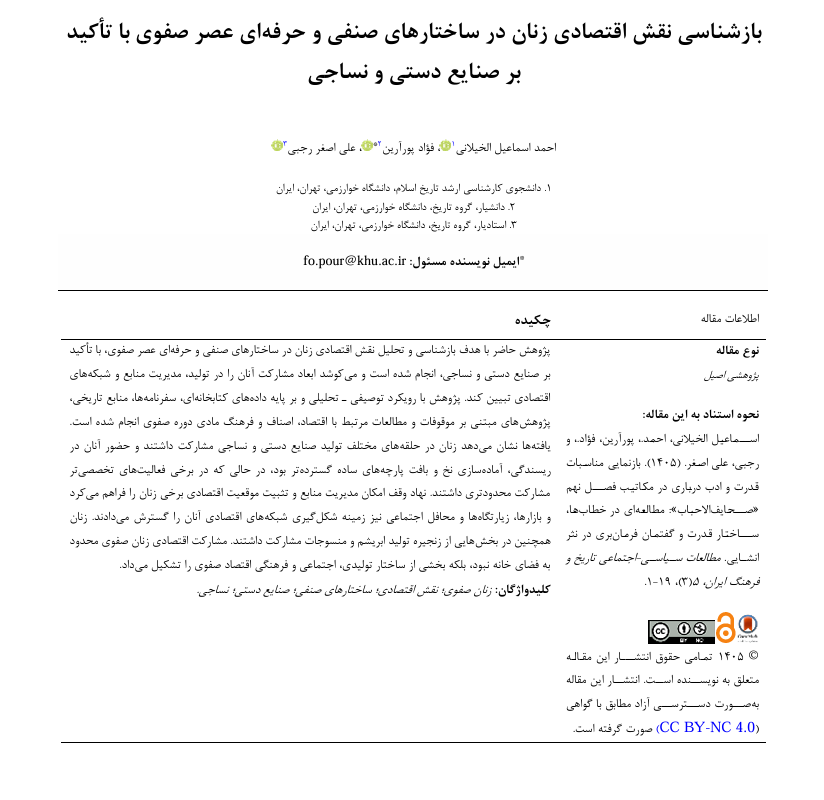
پژوهش حاضر با هدف بازشناسی و تحلیل نقش اقتصادی زنان در ساختارهای صنفی و حرفهای عصر صفوی، با تأکید بر صنایع دستی و نساجی، انجام شده است و میکوشد ابعاد مشارکت آنان را در تولید، مدیریت منابع و شبکههای اقتصادی تبیین کند. پژوهش با رویکرد توصیفی ـ تحلیلی و بر پایه دادههای کتابخانهای، سفرنامهها، منابع تاریخی، پژوهشهای مبتنی بر موقوفات و مطالعات مرتبط با اقتصاد، اصناف و فرهنگ مادی دوره صفوی انجام شده است. یافتهها نشان میدهد زنان در حلقههای مختلف تولید صنایع دستی و نساجی مشارکت داشتند و حضور آنان در ریسندگی، آمادهسازی نخ و بافت پارچههای ساده گستردهتر بود، در حالی که در برخی فعالیتهای تخصصیتر مشارکت محدودتری داشتند. نهاد وقف امکان مدیریت منابع و تثبیت موقعیت اقتصادی برخی زنان را فراهم میکرد و بازارها، زیارتگاهها و محافل اجتماعی نیز زمینه شکلگیری شبکههای اقتصادی آنان را گسترش میدادند. زنان همچنین در بخشهایی از زنجیره تولید ابریشم و منسوجات مشارکت داشتند. مشارکت اقتصادی زنان صفوی محدود به فضای خانه نبود، بلکه بخشی از ساختار تولیدی، اجتماعی و فرهنگی اقتصاد صفوی را تشکیل میداد.
دانلودها
مراجع
Aghili, S. A. (2014). Classification of guilds and an explanation of their internal and external structures during the Safavid era. Tarikhnameh-ye Iran-e Ba’d az Islam, 5(8), 143-170.
Ahmadi Gasmuni, F. (2016). The economic status of women during the Safavid era from the perspective of foreign travel writers. Farhang-e Pazhuhesh, 9(25), 119-150.
Arjah, A. (2012). Women’s endowments in the Safavid and Ottoman periods. Tarikh-e Ravabet-e Khareji, 13(52-53), 1-12.
Chardin, J. (2010). Sir John Chardin’s travels in Persia (Abridged ed.). Cosimo Classics.
Ebrahimi Naghani, H., & Jafari Dehkordi, N. (2018). A study of the design and patterns of Safavid brocade textiles: A case study of human figure design. Honarha-ye Sana’i-ye Iran, 1(2), 25-52.
Falsafi, N. (1990). The life of Shah Abbas I (4th ed., Vol. 1-5). Elmi.
Feizi, F., & Montasheri, M. (2017). The role of the weaving industry and art in the economy and trade of the Safavid period. Studies in the History and Civilization of Iran and Islam, 2(1), 21-30.
Heydarian, Z. (2009). Female endowers in the Safavid era. Farhang, 22(70), 119-138.
Kaaba, N., & Fathi, K. (2021). Social functions of the family with emphasis on the role of women in the Safavid era. Tarikh, 16(60), 237-262.
Keyvani, M. (2016). Artisans and guild life in the Safavid era: Essays in the social and economic history of Iran (Y. Farrokhi, Trans.; 2nd ed.). Amir Kabir.
Matthee, R. P. (1999). The politics of trade in Safavid Iran: Silk for silver, 1600–1730. Cambridge University Press.
Rahimpour-Azghadi, T., & Kermani, M. (2022). Leisure spaces and opportunities for women’s social participation: A case study of the Safavid era in Iran. Islamic Studies of Women and Family, 9(17), 250-255.
Shormij, M. (2015). The role of Gilan silk in the economy of the Safavid era up to the end of the reign of Shah Abbas I. History of Islam and Iran(27), 125-151.
Vahid Qazvini, M. T. (1950). Abbasnameh, or an account of the twenty-two-year reign of Shah Abbas II (1642–1663). Ketabforushi Davoudi.
Zarrinbaf-Shahr, F. (2005). Economic activities of Safavid women at the Ardabil shrine. Nameh-ye Tarikh-Pazhuhan, 3(1), 80-102.
دانلودها
گاهشمار انتشار
- ارسال
- بازنگری
- پذیرش
شماره
نوع مقاله
مجوز
حق نشر 2026 Ahmed Ismael Al-khailani (Author); Foad Pour Arian (Corresponding Author); Ali Asghar Rajabi (Author)

این پروژه تحت مجوز بین المللی Creative Commons Attribution-NonCommercial 4.0 می باشد.