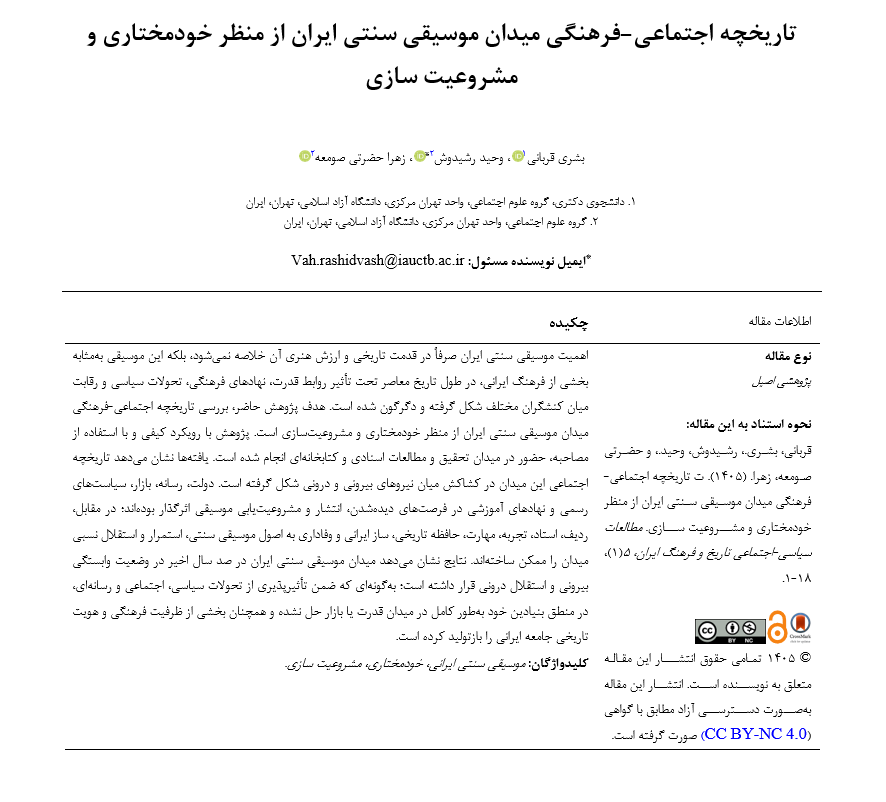
تاریخچه اجتماعی-فرهنگی میدان موسیقی سنتی ایران از منظر خودمختاری و مشروعیت سازی
کلمات کلیدی:
موسیقی سنتی ایرانی, خودمختاری, مشروعیت سازیچکیده
اهمیت موسیقی سنتی ایران صرفاً در قدمت تاریخی و ارزش هنری آن خلاصه نمیشود، بلکه این موسیقی بهمثابه بخشی از فرهنگ ایرانی، در طول تاریخ معاصر تحت تأثیر روابط قدرت، نهادهای فرهنگی، تحولات سیاسی و رقابت میان کنشگران مختلف شکل گرفته و دگرگون شده است. هدف پژوهش حاضر، بررسی تاریخچه اجتماعی-فرهنگی میدان موسیقی سنتی ایران از منظر خودمختاری و مشروعیتسازی است. پژوهش با رویکرد کیفی و با استفاده از مصاحبه، حضور در میدان تحقیق و مطالعات اسنادی و کتابخانهای انجام شده است. یافتهها نشان میدهد تاریخچه اجتماعی این میدان در کشاکش میان نیروهای بیرونی و درونی شکل گرفته است. دولت، رسانه، بازار، سیاستهای رسمی و نهادهای آموزشی در فرصتهای دیدهشدن، انتشار و مشروعیتیابی موسیقی اثرگذار بودهاند؛ در مقابل، ردیف، استاد، تجربه، مهارت، حافظه تاریخی، ساز ایرانی و وفاداری به اصول موسیقی سنتی، استمرار و استقلال نسبی میدان را ممکن ساختهاند. نتایج نشان میدهد میدان موسیقی سنتی ایران در صد سال اخیر در وضعیت وابستگی بیرونی و استقلال درونی قرار داشته است؛ بهگونهای که ضمن تأثیرپذیری از تحولات سیاسی، اجتماعی و رسانهای، در منطق بنیادین خود بهطور کامل در میدان قدرت یا بازار حل نشده و همچنان بخشی از ظرفیت فرهنگی و هویت تاریخی جامعه ایرانی را بازتولید کرده است.
دانلودها
مراجع
Azaripour, S., Shayeganfar, N., & Khodami, A. (2025). A Bourdieusian Analysis of the Effects of the Islamic Revolution on the Field of Iranian Music: A Case Study of the Center for the Preservation and Dissemination of Iranian Music. Scientific Quarterly of Culture and Communication Studies, 26(71), 217-240.
Azizi, M. R., & Kazemi, A. (2023). Traditional Iranian Music in the Views of Selected Iranian-Islamic Philosophers and Mystics. Quarterly Journal of Art and Aesthetics Studies, 2(6).
Bourdieu, P. (2001). Practical Reason: On the Theory of Action. Naghs-o-Negar Publishing.
Farhadi Mahalli, M., Torkaman, F., Kowsari, M., & Madani, S. (2014). Autonomy and Legitimation of the Field of Cinema in Post-Revolutionary Iran (1979-2011) [Master's thesis, Islamic Azad University, Central Tehran Branch, Faculty of Psychology and Educational Sciences].
Gharbi, M., Koushki, A., & Askari Chavarchi, H. (2022). Music Consumption and Its Relationship with Cultural Capital: A Qualitative Study in Tehran. Society, Culture and Media, 11(45), 159-188.
Ilić, I. (2023). Music Theory in Serbia: Tracing the Legitimation of the Disciplinary Identity. 614-643.
Kashfi, M., Sharifzadeh, M. R., & Khoei, M. (2022). A Sociological Analysis of Classical Music Education in Iran from Bourdieu's Perspective: A Case Study of the Piano. 13(1), 105-124.
Khaksar, A. (2009). A Review and Critique of Traditional Iranian Music with an Approach to the Iranian Musical Tradition in the Contemporary Period. Sociology of Art and Literature, 1(1), 38.
Luvaas, B. (2013). Exemplary Centers and Musical Elsewheres: On Authenticity and Autonomy in Indonesian Indie Music. Asian Music, 44(2), 95-114. https://doi.org/10.1353/amu.2013.0011
Mirian, M., Asadi, H., & Eslami, S. (2021). An Adornian Analysis of the Culture Industry and Commodification in Iranian Music from a Sociological Perspective. Sociological studies, 14(53), 71-89.
Salgi Lorestani, M. (2014). Standardization and Investigation of the Psychometric Properties of the Autonomy Development Questionnaire [Master's thesis, Islamic Azad University].
Tai, Y. (2023). The ties that conform: Legitimacy and innovation of live music venues and local music scenes. Poetics, 100, 101819.
دانلودها
گاهشمار انتشار
- ارسال
- بازنگری
- پذیرش
شماره
نوع مقاله
مجوز
حق نشر 2026 Boshra Ghorbani (Author); Vahid Rashidvash (Corresponding Author); Zahra Hazarati Someeh (Author)

این پروژه تحت مجوز بین المللی Creative Commons Attribution-NonCommercial 4.0 می باشد.