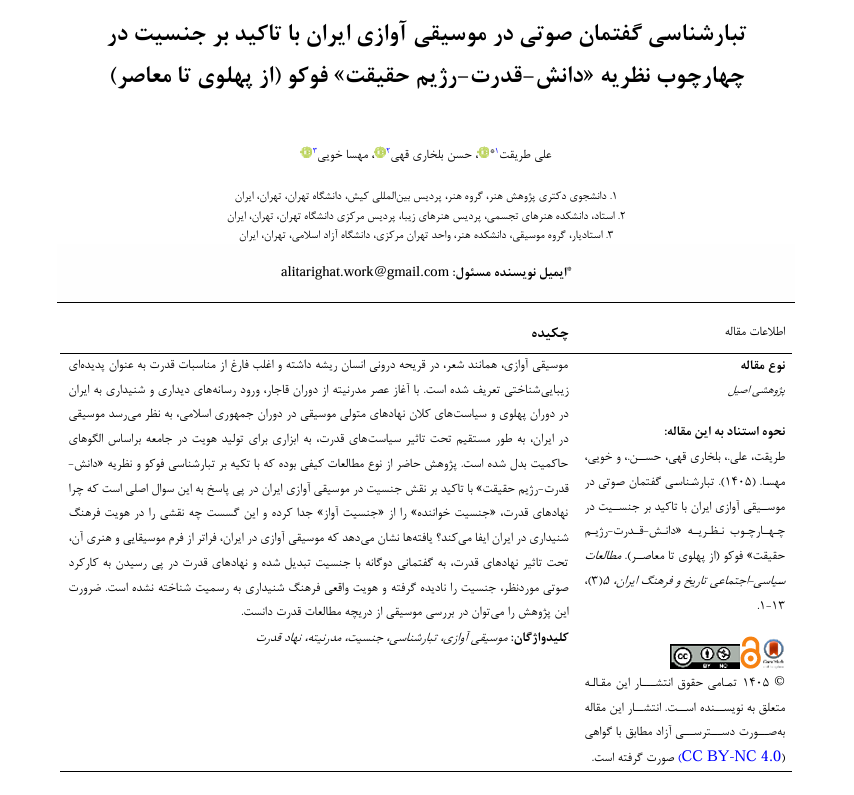
تبارشناسی گفتمان صوتی در موسیقی آوازی ایران با تاکید بر جنسیت در چهارچوب نظریه «دانش-قدرت-رژیم حقیقت» فوکو (از پهلوی تا معاصر)
کلمات کلیدی:
موسیقی آوازی, تبارشناسی, جنسیت, مدرنیته, نهاد قدرتچکیده
موسیقی آوازی، همانند شعر، در قریحه درونی انسان ریشه داشته و اغلب فارغ از مناسبات قدرت به عنوان پدیدهای زیباییشناختی تعریف شده است. با آغاز عصر مدرنیته از دوران قاجار، ورود رسانههای دیداری و شنیداری به ایران در دوران پهلوی و سیاستهای کلان نهادهای متولی موسیقی در دوران جمهوری اسلامی، به نظر میرسد موسیقی در ایران، به طور مستقیم تحت تاثیر سیاستهای قدرت، به ابزاری برای تولید هویت در جامعه براساس الگوهای حاکمیت بدل شده است. پژوهش حاضر از نوع مطالعات کیفی بوده که با تکیه بر تبارشناسی فوکو و نظریه «دانش-قدرت-رژیم حقیقت» با تاکید بر نقش جنسیت در موسیقی آوازی ایران در پی پاسخ به این سوال اصلی است که چرا نهادهای قدرت، «جنسیت خواننده» را از «جنسیت آواز» جدا کرده و این گسست چه نقشی را در هویت فرهنگ شنیداری در ایران ایفا میکند؟ یافتهها نشان میدهد که موسیقی آوازی در ایران، فراتر از فرم موسیقایی و هنری آن، تحت تاثیر نهادهای قدرت، به گفتمانی دوگانه با جنسیت تبدیل شده و نهادهای قدرت در پی رسیدن به کارکرد صوتی موردنظر، جنسیت را نادیده گرفته و هویت واقعی فرهنگ شنیداری به رسمیت شناخته نشده است. ضرورت این پژوهش را میتوان در بررسی موسیقی از دریچه مطالعات قدرت دانست.
دانلودها
مراجع
Abbasi, H. (2005). Radio Music during the Pahlavi Regime. Radio Monthly(26), 43-48.
Akbari, Y. (2014). Foucault's Archaeology and Genealogy: A Transition from Conventional Historiography. New History, 4(7), 24-50.
Bahrami, F. (2007). Determining the Effectiveness of a Gender Stereotypes Training Workshop on Changing Gender Stereotypes among Women and Men in Isfahan. Women's Studies, 5(1), 93-106.
Bakhshayesh Ardestani, A. (2009). Foucault and the Theory of Knowledge, Power, and the Regime of Truth. Daneshnameh (Science and Research Branch)(3), 43-52.
Dehlavi, H. (1998). Music: The Connection between Poetry and Vocal Music. Honar(36), 139-158.
Eslami, R., & Taji, S. (2019). Pathology of Music Policymaking in the Islamic Republic of Iran. Public policy, 5(4), 261-279.
Fattahi, S. M. (2008). Discourse of Power in Michel Foucault's Thought. Daneshnameh (Science and Research Branch)(4), 65-73.
Ghaderi, Z. (2011). Critique of the Philosophical Discourse of Modernity: Subject, Truth, and Power in Michel Foucault's Thought. Fundamental Western Studies, 2(2), 127-179.
Ghaderzadeh, H., Nouri, H., & Naeimi, A. (2012). Reconceptualizing the Concept of Power in Foucault's Thought. Fundamental Western Studies, 3(2), 107-127.
Ghaffari-Nasab, E., & Refahat, F. (2019). How the Status of Women in Iranian Traditional Music Was Represented in the 1980s. Woman in Culture and Art, 11(3), 325-344.
Malekan, M., & Moazen, K. (2015). Music Policymaking in the Islamic Republic of Iran. Media(99), 45-68.
Mirkhandan, S. H. (2015). An Introduction to Policymaking in Music. Religion and Cultural Policy, 2(4), 71-104.
Mirzaei, R., & Shahroudi, F. (2023a). Causes of the Disconnection of Musical Listening Culture from Cultural and Artistic Authenticities in Iran. Sociology of Culture and Art, 5(2), 133-148.
Mirzaei, R., & Shahroudi, F. (2023b). A Qualitative Study of the Distancing of Iran's Musical Listening Culture from Its Authentic Roots during the Second Pahlavi Period. Sociology of Culture and Art, 5(4), 142-155.
Ozdanlou, H. (2006). Michel Foucault: Thinker of the Unthought. Political-Economic Information(223-224), 52-65.
Pourhosseini, M. (2005). Singing in Iran. Farhang va Ahang(8), 48-53.
Samim, R., & Khezraei, B. (2005). A Look at the Relationship between Quantitative Poetry and Iranian Vocal Music. Maaref(63), 80-86.
Setayeshgar, M. (2012). Dictionary of Iranian Music (3 ed., Vol. 1). Ettela'at Publications.
Zamani, M. M. (2022). Pop Maddahi and Competition over the Audience. Specialized Scientific Quarterly of Ritual Studies 'A'(3), 114-123.
دانلودها
گاهشمار انتشار
- ارسال
- بازنگری
- پذیرش
شماره
نوع مقاله
مجوز
حق نشر 2026 Ali Tarighat, Hassan Bolkhari Ghehi, Mahsa Khouyi (Author)

این پروژه تحت مجوز بین المللی Creative Commons Attribution-NonCommercial 4.0 می باشد.