نظم جنسیتی در ایران پس از انقلاب: پیوند دین-دولت، تحولات نهادی و عاملیت زنان (۱402–1357)
کلمات کلیدی:
نظم جنسیتی, پدرسالاری دولتی, دین و سیاست, کنشگری مدنی, ایران پس از انقلابچکیده
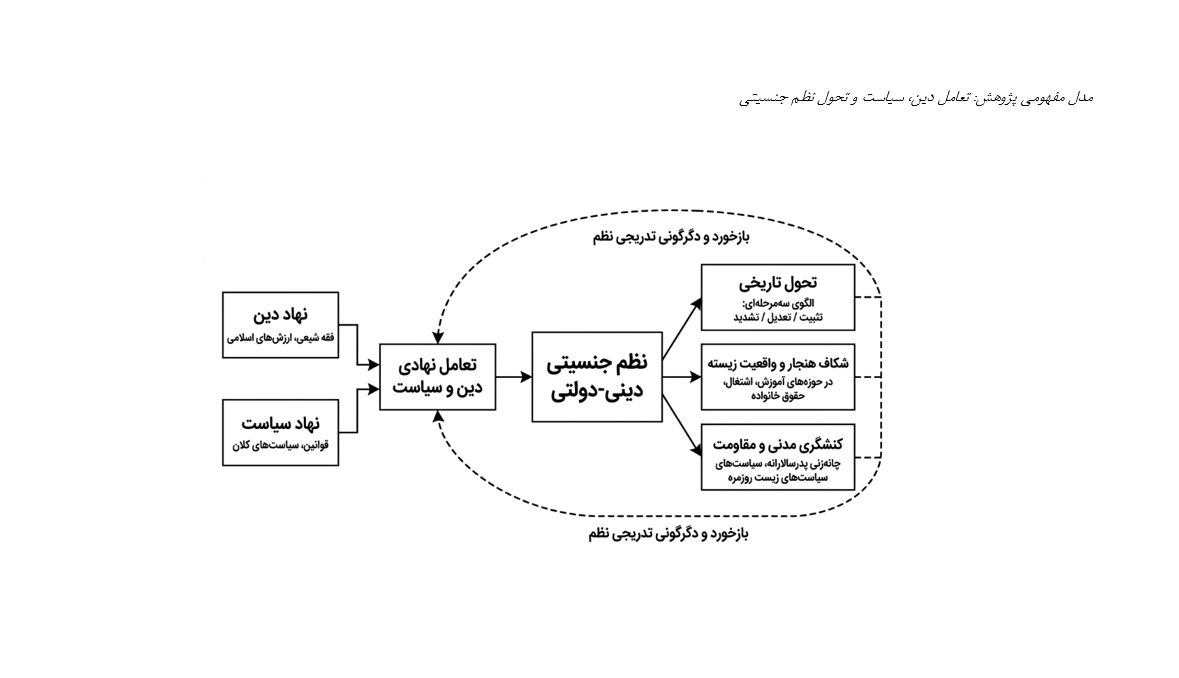
این مقاله با رویکرد جامعهشناختی کیفی و با استفاده از تحلیل تماتیک و تحلیل تاریخی-نهادی، تحول نظم جنسیتی در ایران پس از انقلاب اسلامی (۱402-۱357) و پیامدهای اجتماعی آن برای زنان را بررسی میکند. پرسش اصلی، واکاوی نقش تعاملی نهاد دین و نهاد سیاست در شکلدهی به جایگاه حقوقی و اجتماعی زنان است. دادهها از دو منبع گردآوری شد: (الف) مصاحبههای نیمهساختاریافته با ۲۲ نفر از زنان دارای موقعیتهای سوژگی متفاوت (۹ مدیر نهادی و ۱۳ فعال مدنی و مستقل) که با نمونهگیری هدفمند و رویکرد تنوع محدود در میان زنان شهری و تحصیلکرده انتخاب شدند؛ (ب) مرور و تحلیل ۴۵ سند بالادستی (قوانین، سیاستهای کلی خانواده، سیاستهای جمعیتی و برنامههای پنجساله توسعه) که از میان آنها ۱۰ سند کلیدی به طور عمیق تحلیل شدند. یافتهها نشان میدهد نظم جنسیتی در ایران سه مرحله را تجربه کرده است: «تثبیت نهادی» (۱۳68-۱۳57)، «تعدیل نسبی» (۱۳۶۸-۱۳۸۴) و «تشدید محافظهکاری» (۱402-۱384) که بر اساس تحولات کلان سیاسی (پایان جنگ، تغییر دولتها و برنامههای توسعه) مستند شده است. پیامد اصلی، ایجاد شکاف عمیق میان «نظم هنجاری» و «واقعیت زیسته» زنان در حوزههای آموزش عالی، اشتغال، حقوق خانواده و مشارکت سیاسی است. برای نمونه، با وجود آنکه زنان بیش از ۶۰ درصد دانشجویان را تشکیل میدهند (مرکز آمار ایران، ۱۴۰۰)، نرخ مشارکت اقتصادی آنان حدود ۱۶ درصد باقی مانده است (بانک جهانی، ۲۰۲۲). در برابر این محدودیتهای ساختاری، زنان ایرانی راهبردهای متنوعی از کنشگری مدنی (از کمپینهای حقوقی سازمانیافته تا اشکال غیررسمی کنش در چارچوب «سیاستهای زیست روزمره») توسعه دادهاند. مقاله نتیجه میگیرد که فهم دقیق نظم جنسیتی در ایران مستلزم خوانشی تلفیقی از تعامل دین، سیاست و عاملیت اجتماعی است.
دانلودها
مراجع
Afary, J. (2009). Sexual Politics in Modern Iran. Cambridge University Press.
Al-Rasheed, M. (2013). A Most Masculine State: Gender, Politics, and Religion in Saudi Arabia. Cambridge University Press.
Bayat, A. (2010). Life as Politics: How Ordinary People Change the Middle East. Stanford University Press.
Braun, V., & Clarke, V. (2021). Thematic Analysis: A Practical Guide. Sage Publications.
British Educational Research, A. (2018). Ethical Guidelines for Educational Research.
Creswell, J. W., & Poth, C. N. (2018). Qualitative Inquiry and Research Design: Choosing among Five Approaches (4th ed.). Sage Publications.
Denzin, N. K. (1978). The Research Act: A Theoretical Introduction to Sociological Methods (2nd ed.). McGraw-Hill.
Gole, N. (1996). The Forbidden Modern: Civilization and Veiling. University of Michigan Press.
Hoodfar, H., & Assadpour, S. (2000). The Politics of Population Policy in the Islamic Republic of Iran. Studies in Family Planning, 31(1), 19-34.
Kandiyoti, D. (1988). Bargaining with Patriarchy. Gender & Society, 2(3), 274-290.
Kandiyoti, D. (1991). Islam and Patriarchy: A Comparative Perspective. In N. R. Keddie & B. Baron (Eds.), Women in Middle Eastern History (pp. 23-42). Yale University Press.
Kian-Thiebaut, A. (2005). Changes in the Legal Status of Women and the Family in Iran since 1979. Critique Internationale, 28(3), 91-108.
Kian, A. (1997). Women and Politics in Post-Islamist Iran: The Gender Conscious Drive to Change. British Journal of Middle Eastern Studies, 24(1), 75-96.
Kvale, S., & Brinkmann, S. (2009). InterViews: Learning the Craft of Qualitative Research Interviewing (2nd ed.). Sage Publications.
Lincoln, Y. S., & Guba, E. G. (1985). Naturalistic Inquiry. Sage Publications.
Mahmood, S. (2005). Politics of Piety: The Islamic Revival and the Feminist Subject. Princeton University Press.
Merriam, S. B., & Tisdell, E. J. (2016). Qualitative Research: A Guide to Design and Implementation (4th ed.). Jossey-Bass.
Mir-Hosseini, Z. (1996). Women and Politics in Post-Khomeini Iran: Divorce, Veiling and Emerging Feminist Voices. In H. Afshar (Ed.), Women and Politics in the Third World (pp. 142-162). Routledge.
Moghadam, V. M. (2003). Modernizing Women: Gender and Social Change in the Middle East (2nd ed.). Lynne Rienner Publishers.
Nosrat Khwarazmi, Z., Ghasempour, F., & Nosrat Khwarazmi, H. (2020). Women's Cultural Agency after the Islamic Revolution: A Discourse Analysis of Islamic Feminism's Demands in the Islamic Republic of Iran. Social Studies and Research in Iran, 9(4), 931-966.
Osanloo, A. (2009). The Politics of Women's Rights in Iran. Princeton University Press.
Paidar, P. (1995). Women and the Political Process in Twentieth-Century Iran. Cambridge University Press.
Patton, M. Q. (2015). Qualitative Research and Evaluation Methods (4th ed.). Sage Publications.
Sanasarian, E. (1982). The Women's Rights Movement in Iran: Mutiny, Appeasement, and Repression from 1900 to Khomeini. Praeger.
Scott, J. W. (1986). Gender: A Useful Category of Historical Analysis. The American Historical Review, 91(5), 1053-1075.
Scott, J. W. (1995). Gender and the Politics of History (Rev. ed.). Columbia University Press.
Tohidi, N. (2016). Women's Rights and Feminist Movements in Iran. Sur - International Journal on Human Rights, 13(24), 75-89.
Walby, S. (1990). Theorizing Patriarchy. Blackwell.
Zia, A. S. (2009). Faith-Based Politics, Enlightened Moderation and the Pakistani Women's Movement. Journal of International Women's Studies, 11(1), 225-245.
دانلودها
گاهشمار انتشار
- ارسال
- بازنگری
- پذیرش
شماره
نوع مقاله
مجوز
حق نشر 2025 elham Afshar Kohan (Author); Abolfazl Zolfaghari (Corresponding Author); Abbas Keshavarz Shokri (Author)

این پروژه تحت مجوز بین المللی Creative Commons Attribution-NonCommercial 4.0 می باشد.