کارکرد سیاسی آیین خلعتپوشانی و دیپلماسی هدیه در دوره قاجاریه
DOI::
https://doi.org/10.61838/kman.jspsich.548کلمات کلیدی:
خلعتپوشانی, دیپلماسی هدیه, دوره قاجار, پیشکش, آیینهای سیاسی, فرهنگ درباری, اقتدار سلطنتیچکیده
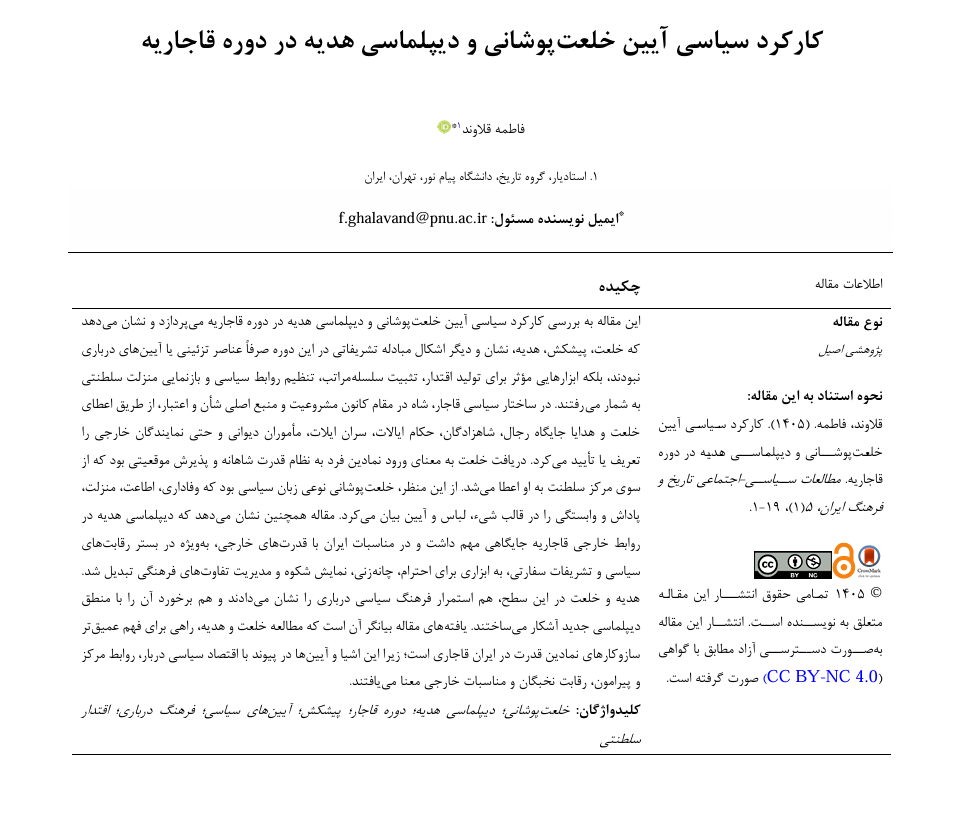
این مقاله به بررسی کارکرد سیاسی آیین خلعتپوشانی و دیپلماسی هدیه در دوره قاجاریه میپردازد و نشان میدهد که خلعت، پیشکش، هدیه، نشان و دیگر اشکال مبادله تشریفاتی در این دوره صرفاً عناصر تزئینی یا آیینهای درباری نبودند، بلکه ابزارهایی مؤثر برای تولید اقتدار، تثبیت سلسلهمراتب، تنظیم روابط سیاسی و بازنمایی منزلت سلطنتی به شمار میرفتند. در ساختار سیاسی قاجار، شاه در مقام کانون مشروعیت و منبع اصلی شأن و اعتبار، از طریق اعطای خلعت و هدایا جایگاه رجال، شاهزادگان، حکام ایالات، سران ایلات، مأموران دیوانی و حتی نمایندگان خارجی را تعریف یا تأیید میکرد. دریافت خلعت به معنای ورود نمادین فرد به نظام قدرت شاهانه و پذیرش موقعیتی بود که از سوی مرکز سلطنت به او اعطا میشد. از این منظر، خلعتپوشانی نوعی زبان سیاسی بود که وفاداری، اطاعت، منزلت، پاداش و وابستگی را در قالب شیء، لباس و آیین بیان میکرد. مقاله همچنین نشان میدهد که دیپلماسی هدیه در روابط خارجی قاجاریه جایگاهی مهم داشت و در مناسبات ایران با قدرتهای خارجی، بهویژه در بستر رقابتهای سیاسی و تشریفات سفارتی، به ابزاری برای احترام، چانهزنی، نمایش شکوه و مدیریت تفاوتهای فرهنگی تبدیل شد. هدیه و خلعت در این سطح، هم استمرار فرهنگ سیاسی درباری را نشان میدادند و هم برخورد آن را با منطق دیپلماسی جدید آشکار میساختند. یافتههای مقاله بیانگر آن است که مطالعه خلعت و هدیه، راهی برای فهم عمیقتر سازوکارهای نمادین قدرت در ایران قاجاری است؛ زیرا این اشیا و آیینها در پیوند با اقتصاد سیاسی دربار، روابط مرکز و پیرامون، رقابت نخبگان و مناسبات خارجی معنا مییافتند.
دانلودها
مراجع
Abtahi, S. A., & Karimi, N. (2016). The Place of Pishkesh in the Revenues of the Nasiri Era Based on Documents, 1848-1896. Sokhan-e Tarikh, 10(23).
Amanat, A. (1997). Pivot of the Universe: Nasir al-Din Shah Qajar and the Iranian Monarchy, 1831-1896. University of California Press.
Amin al-Dowleh, A. K. (1991). The Political Memoirs of Mirza Ali Khan Amin al-Dowleh. Amir Kabir.
Ashraf, A. (2016). The Politics of Gift Exchange in Early Qajar Iran, 1785-1834. Comparative Studies in Society and History, 58(2), 550-576. https://doi.org/10.1017/S0010417516000177
E'Temad al-Saltaneh, M. H. K. (1984). The Diary of E'temad al-Saltaneh. Amir Kabir.
Floor, W. M. (1998). A Fiscal History of Iran in the Safavid and Qajar Periods, 1500-1925. Bibliotheca Persica Press.
Floor, W. M. (1999). The Persian Textile Industry: Its Products and Their Use, 1500-1925. Association pour l'avancement des études iraniennes.
Floor, W. M. (2001). Gift Giving v. In the Qajar Period. Encyclopaedia Iranica (Vol. X, pp. 615-617).
Floor, W. M. (2017). Khil'at. Encyclopaedia Iranica.
Fraser, J. B. (1825). Narrative of a Journey into Khorasan in the Years 1821 and 1822. Longman, Hurst, Rees, Orme, Brown, and Green.
Ilchi, A. K. (1984). Hayrat-Namah: The Travelogue of Mirza Abolhasan Khan Ilchi to Europe. Amir Kabir.
Khormuji, M. J. f. (1965). Haqayiq al-Akhbar-i Nasiri. Zavar.
Khosh Ab, F., & Aghazadeh, J. (2025). Economic Functions of Khil'at and Khil'at-Bestowal in the Qajar Era: Based on Reports of Foreign Travelers. Historical Journal of Iran after Islam, 16(42), 55-83. https://doi.org/10.22034/jiiph.2024.61228.2511
Lambton, A. K. S. (1994). Pishkash: Present or Tribute? Bulletin of the School of Oriental and African Studies, 57(1), 145-158.
Mahmoud, M. (1974). The History of Political Relations between Iran and Britain in the Nineteenth Century. Eqbal.
Morier, J. J. (1812). A Journey through Persia, Armenia, and Asia Minor, to Constantinople, in the Years 1808 and 1809. Longman, Hurst, Rees, Orme, and Brown.
Mostawfi, A. (1963). The Story of My Life; or, The Social and Administrative History of the Qajar Period. Zavar.
Naser al-Din Shah, Q. (2010). The Diary of Nasir al-Din Shah Qajar. Sokhan.
Rahmani Ghourtani, M., Mohammad Khani, S., & Dehghannezhad, M. (2013). An Introduction to Bribery, Pishkesh, and Its Types in the Qajar Period: With Emphasis on the Nasiri Period. Jelve-ye Honar, 23(17), 127-153. https://doi.org/10.22051/hii.2014.728
Sepehr, M. T. (1998). Nasikh al-Tawarikh: The History of the Qajars, from the Beginning to the End of the Reign of Fath-Ali Shah. Asatir.
Shamim, A. A. (1992). Iran under Qajar Rule. Modabber.
Shirazi, M. S. (1968). The Travelogue of Mirza Saleh Shirazi. Tahuri.
SyedBonakdar, S. M., & Kamalvand, M. (2019). An Examination of the Role and Status of Orders and Medals of the Qajar Era in the Foreign and Domestic Relations of This Period. Studies in Islamic History, 11(41).
SyedBonakdar, S. M., & Mohammadi Aeen, S. (2025). Khil'at and Its Functions in the Court Relations of Nasir al-Din Shah Qajar, 1848-1896. History of Islam. https://doi.org/10.22081/hiq.2024.69338.2397
Wills, C. J. (1893). In the Land of the Lion and Sun; or, Modern Persia. Ward, Lock & Bowden.
دانلود
گاهشمار انتشار
- ارسال
- بازنگری
- پذیرش
شماره
نوع مقاله
مجوز
حق نشر 2026 Fatemeh Ghalavand (Corresponding Author)

این پروژه تحت مجوز بین المللی Creative Commons Attribution-NonCommercial 4.0 می باشد.